
Introduction
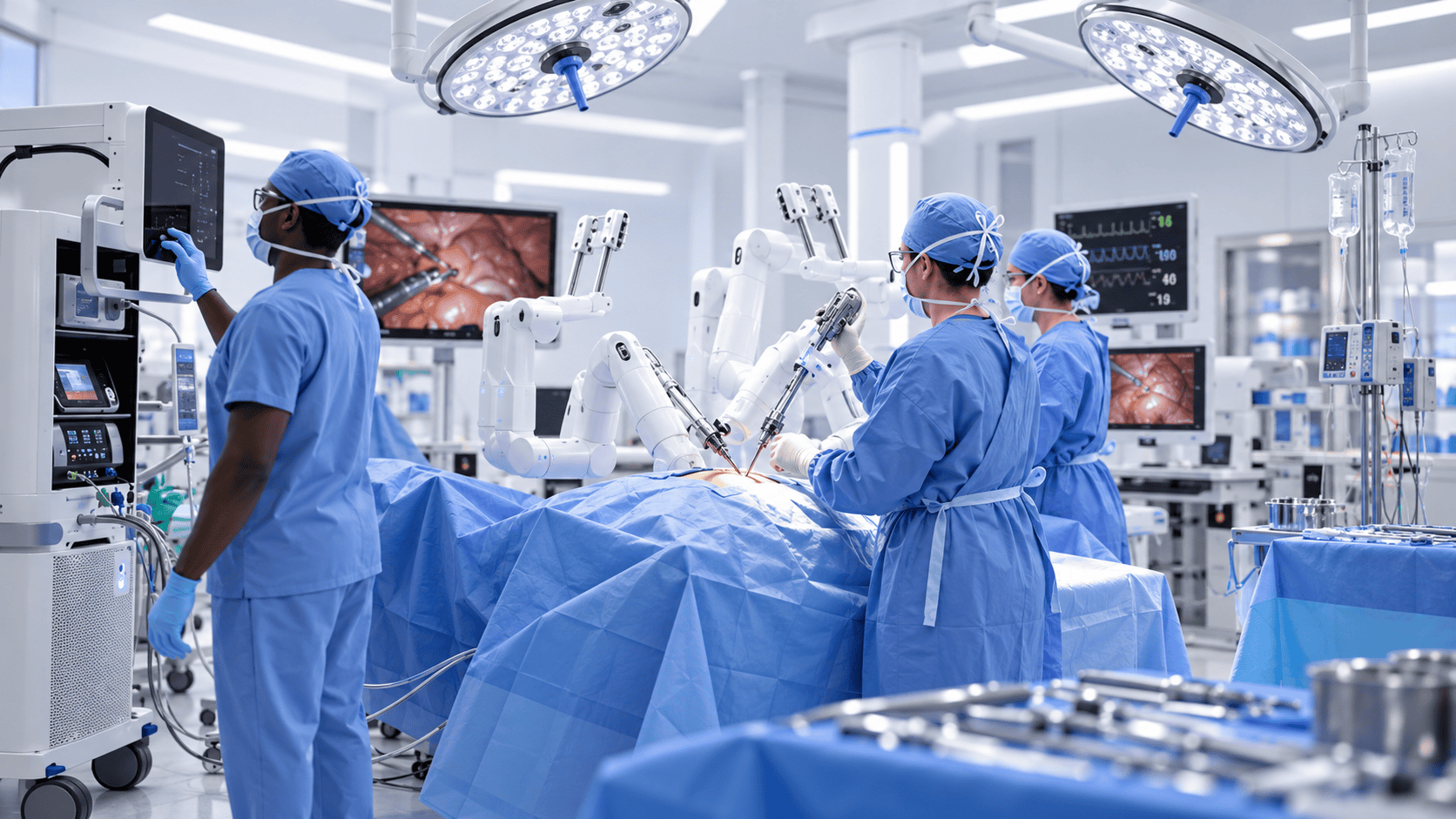
Medical robotics continues to transform how surgical procedures are performed, combining advanced engineering with precision instrumentation and digital technologies. On July 22, 2026, Johnson & Johnson announced that its OTTAVA™ Robotic Surgical System had received U.S. Food and Drug Administration (FDA) marketing authorization for multiple general surgery procedures.
The development marks an important milestone in robotic-assisted surgery, introducing a system that integrates robotic arms directly into the operating table. This approach aims to address challenges involving operating room space, surgical accessibility, and workflow efficiency. OTTAVA demonstrates how mechanical engineering, robotics, system integration, and human-centered design can contribute to advances in medical technology.
OTTAVA’s FDA Authorization and Surgical Applications
Johnson & Johnson’s OTTAVA Robotic Surgical System received FDA De Novo authorization on July 21, 2026, establishing a regulatory classification for its integrated operating table and electromechanical surgical system architecture.
The system is authorized for specified general surgery procedures, including gastric bypass, gastrectomy, gallbladder removal, appendectomy, small bowel resection, and certain other upper-abdominal operations. This authorization followed clinical evaluations intended to assess the system’s safety and performance.
In a clinical study involving 30 patients undergoing Roux-en-Y gastric bypass procedures, Johnson & Johnson reported that the study met its primary safety and performance endpoints through 30 days after surgery. All procedures in the study were completed robotically without conversion to a non-robotic approach.
The authorization represents a significant step in the development of OTTAVA and demonstrates the importance of clinical evaluation, regulatory review, and engineering validation in bringing new medical technologies into clinical use.
Engineering Design: Robotic Arms Integrated into the Operating Table
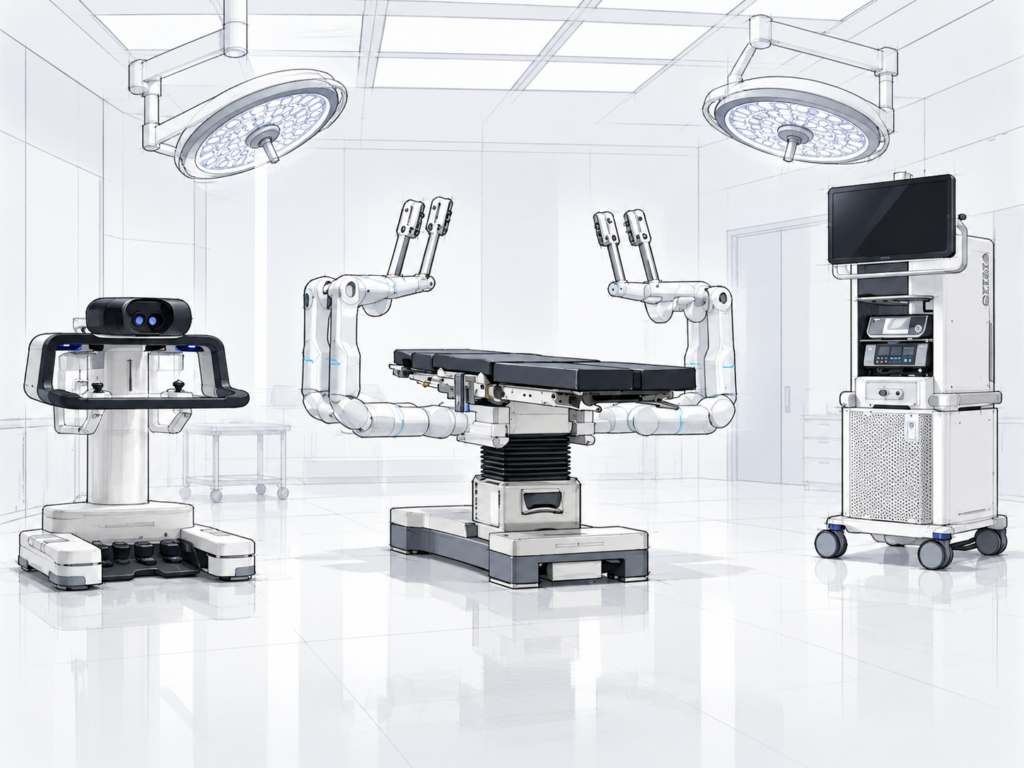
One of OTTAVA’s defining innovations is its table-integrated robotic architecture. Unlike conventional surgical robotic systems that use separate carts or overhead structures, OTTAVA incorporates four robotic arms directly into the operating table.
This design is intended to reduce the equipment footprint in the operating room and provide surgical teams with additional working space. The robotic arms can move into predefined setup and procedure positions, helping simplify preparation and positioning.
A notable engineering feature is the system’s synchronized movement capability, referred to as twin motion. This allows the robotic arms and operating table to move together when the patient is repositioned, supporting access to different anatomical regions without the conventional sequence of fully undocking and repositioning the robotic equipment.
Developing such an integrated system requires coordination across mechanical engineering, electronics, sensors, robotic controls, and software. The design illustrates how component integration, motion control, and ergonomic considerations can influence the functionality of advanced medical equipment.
Precision, Safety, and Surgical Workflow
Robotic-assisted surgery requires precise coordination between the surgeon, robotic instruments, and supporting clinical staff. OTTAVA incorporates motorized robotic arms, surgical instruments, sensing technologies, and automated positioning capabilities designed to support this coordination.
Johnson & Johnson developed the system using its experience with Ethicon surgical instrumentation, adapting established instrument technologies for robotic applications. The design emphasizes instrument functionality, usability, and the interaction between robotic components and surgical teams.
Human factors engineering also plays an important role in the development of medical robotic systems. Equipment positioning, surgeon accessibility, staff movement, and intuitive controls must be considered alongside mechanical performance and reliability.
OTTAVA’s integrated architecture is designed to support surgical teams working in operating rooms with limited space. More broadly, its development demonstrates how engineering decisions can address practical clinical requirements, while formal testing and regulatory evaluation remain essential to establishing device safety and performance.
The Future of Robotic-Assisted Surgery
Beyond its mechanical architecture, OTTAVA incorporates digital technologies intended to support the continued development of robotic surgery. The system connects with Johnson & Johnson’s Polyphonic™ Digital Ecosystem, which brings together surgical data, video, devices, and information intended to support clinical teams.
According to Johnson & Johnson, simulation, automation, artificial intelligence, and data-driven analysis are important areas for the future development of surgical robotics. Digital simulation may eventually help surgical teams rehearse procedures, study equipment behavior, and improve training environments.
These capabilities also highlight the importance of multidisciplinary engineering. Mechanical design, software development, electronics, system integration, usability testing, and clinical validation must work together to support increasingly sophisticated medical devices.
As surgical robotics evolves, future systems may place greater emphasis on adaptable designs, enhanced visualization, efficient clinical workflows, and technologies that assist healthcare professionals in performing complex procedures.
Conclusion
Johnson & Johnson’s OTTAVA Robotic Surgical System represents an important development in medical engineering, combining table-integrated robotic arms, synchronized motion, precision instrumentation, and digital technologies within a single surgical platform.
Its 2026 FDA authorization highlights the engineering and regulatory processes involved in introducing advanced medical devices. The system also demonstrates how mechanical engineering, robotics, ergonomics, software integration, and product testing can work together to address real-world healthcare challenges.
As robotic-assisted surgery continues to advance, innovations such as OTTAVA offer valuable insights into the design of complex medical systems and the growing importance of engineering in healthcare technology.
References
Original Johnson & Johnson development article: Inside the Development of Johnson & Johnson’s OTTAVA Robotic Surgical System — October 8, 2026
Johnson & Johnson announcement: Johnson & Johnson Receives FDA Market Authorization in the U.S. for its OTTAVA Robotic Surgical System — July 22, 2026
FDA authorization record: OTTAVA Robotic Surgical System — De Novo Decision DEN250068